AUREUS 33°

The House / The search for exceptional materials

Rarity begins
with a place.

Before the first sketch.
Before the first cut.
The search.

Some of the planet’s most remarkable materials emerge from a small number of extraordinary geological settings. For the House, their beauty is the beginning of a conversation about origin, character and the piece they might become.

01 / Precious metals

Gold.
Origin and refinement.

China, Australia, Russia, Canada and Ghana are important names in global gold mining. The scale of a deposit describes a geological resource; it does not determine the quality of a finished jewel.

USGS / Mineral Commodity Summaries 2026 ↗

Mining, refining and purchase are different stages in the material’s story. Dubai is a major physical gold trading centre; Switzerland is an important refining and trading hub, with Zurich part of that network. London’s bullion market operates through established Good Delivery standards.

For a commission, the questions become specific: which supplier, which batch, which fineness, and what evidence accompanies the metal? A purchase in a renowned trading centre does not establish where the gold was mined.

02 / Precious metals

Platinum.
A concentrated geography.

South Africa’s Bushveld Complex and Zimbabwe’s Great Dyke are major geological centres of platinum-group metals. Russia is also a significant producing country. These few regions play an outsized role in the world’s platinum story.

For the House, a platinum purchase becomes part of a particular commission through its supplier record, verified fineness and material schedule. The sourcing record follows the metal through its transformation into the finished piece.

03 / Precious stones

A geography
of extraordinary colour.

Renowned regions provide a starting point. The finest choice is always an individual stone.

01Botswana & Russia

Diamonds

Light, held in crystal.

Botswana is celebrated for high-quality diamond production, while Russia is another major diamond-producing region. Each stone must earn its place through its own colour, clarity, cut, character and documented history. A country name alone is never a quality grade.

GIA / Diamond history and sources ↗
02Myanmar

Rubies

An extraordinary depth of red.

Myanmar has a historic place in the story of fine ruby. The most sought-after stones combine compelling colour with transparency and rarity. “Pigeon’s blood” is a colour description applied under particular grading criteria, not a guarantee attached to every Burmese ruby.

GIA / Ruby quality factors ↗
03Colombia

Emeralds

Green with a distinctive presence.

Colombia is one of the great emerald-producing countries, alongside other important sources such as Zambia and Brazil. Colour, transparency, inclusions and any clarity enhancement must be considered together when selecting an individual emerald.

GIA / Corundum and emerald deposits ↗
04Sri Lanka & Madagascar

Sapphires

Blue, with a world within it.

Sri Lanka and Madagascar both produce exceptional sapphires. Kashmir and Myanmar also hold important places in the history of fine blue sapphire. The individual stone, its treatment status and available origin evidence matter more than a regional label alone.

GIA / Sapphire origin and quality ↗
05Merelani, Tanzania

Tanzanite

A remarkable concentration of colour.

Tanzanite’s commercial source is the Merelani Hills of northern Tanzania. Its blue-to-violet appearance can change with viewing direction. The source is the wider Merelani mining area, which includes multiple blocks, rather than Block D alone.

GIA / Tanzanite and Merelani ↗
06Australia

Opals

Colour that moves with the light.

Australia is a celebrated source of precious opal. Lightning Ridge is especially renowned for fine black opal, whose dark body colour can provide a striking setting for its play of colour. Each pattern is assessed as an individual composition.

GIA / Lightning Ridge black opal ↗
From geography to a personal commission

The journey
we can tell.

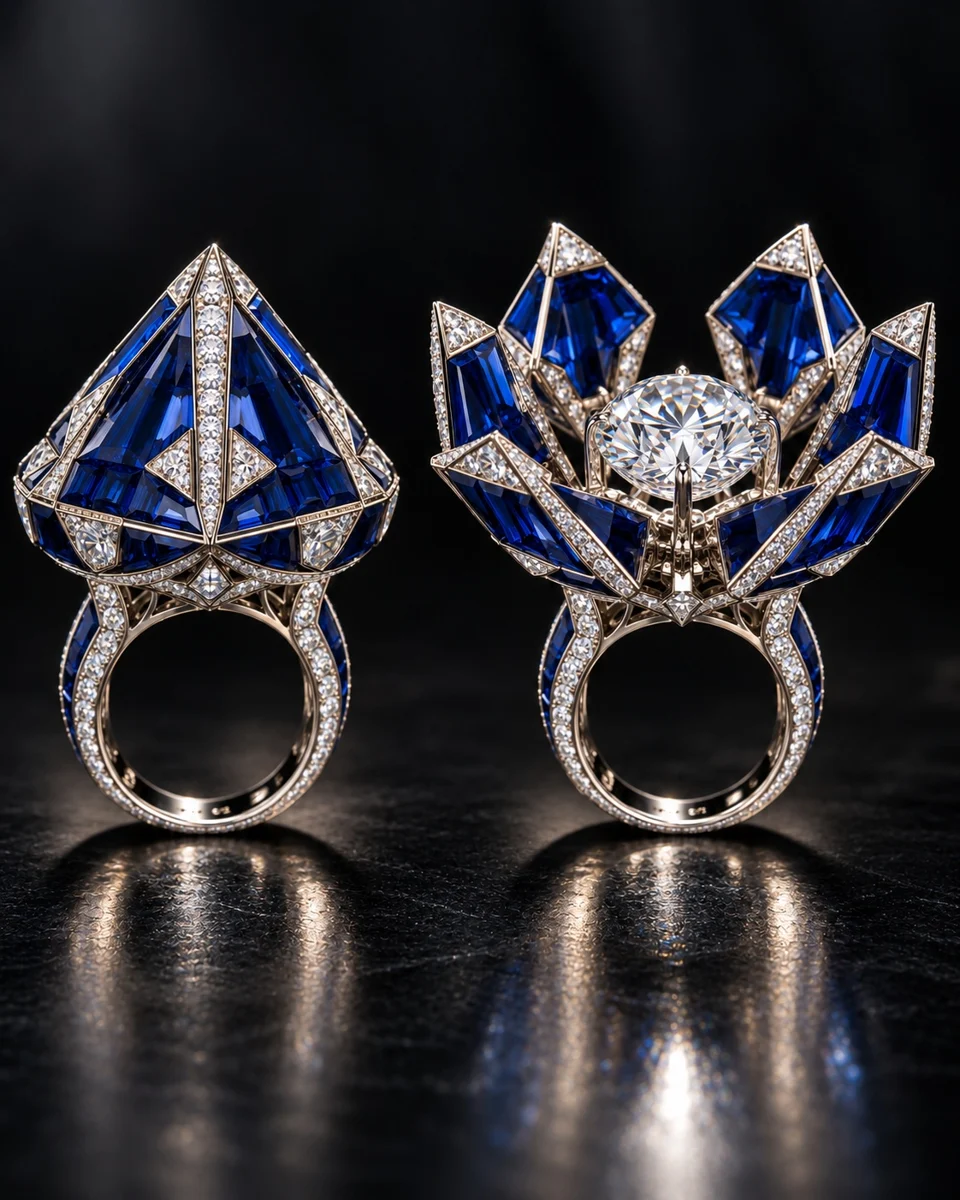
For the Pyramid Reveal Ring, the House recounts sapphires personally collected in Sri Lanka, diamonds personally collected in Africa, and gold and platinum biscuits purchased in the Middle East.

That material journey covered more than 15,000 miles. Its story continues through the cutting, polishing, making and handover recorded in the ring’s personal journal.

Discover the ring’s material journey ↗
Illustrative sapphire and diamond Pyramid Reveal Ring, shown open and closed
Illustrative commission study.

Provenance / The House approach

A place is the beginning.
The record completes the story.

01 / Identity

The material itself

Establish the metal’s fineness or the stone’s identity, treatment status and relevant characteristics. Independent reports are identified where available.

02 / The journey

A traceable account

Connect supplier, purchase and transfer records to the material. Keep collection location distinct from geological origin, and record limits in the evidence.

03 / The commission

A personal archive

Carry the available material records into the commission’s provenance folios and personal journal. Private identifying details remain with the buyer’s confidential archive.

This page is a guide to notable material regions, not a declaration that the House buys from every location listed. Actual sourcing and supporting records are specific to each commission. Origin does not guarantee quality or ethical performance.

Explore the commission journey ↗
Research & references

Geological and gemological context reviewed 1 October 2026. Figures and production rankings change, so this page focuses on established source regions rather than presenting reserve estimates as permanent facts.

By private introduction

The right material.
For one person.

Every commission begins with an individual, an idea and the search for materials worthy of both.

Private introduction ↗